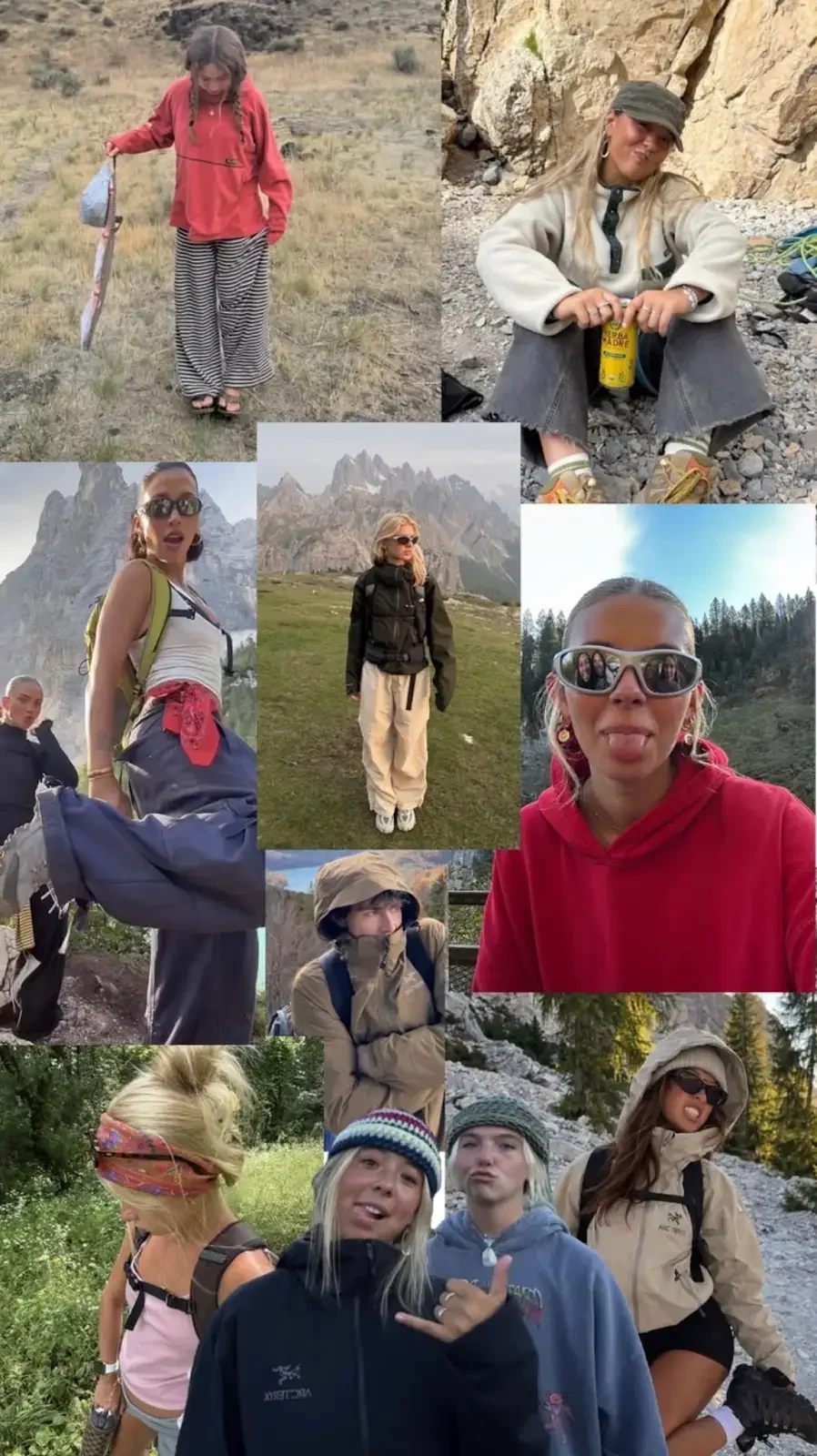
"Performative hiking" influencers have changed the way young people see hiking. Collage by Emery Salyer.
Teen Trails is a recently founded hiking club at Culver City High School, started by sophomores Madeleine Golden and Anna McClanahan. Teen Trails encourages outdoor exercise in teens through organized group hikes. The club meets every Thursday in Room 43 to plan the club’s monthly hikes, and to discuss important topics related to hiking such as “leave no trace,” and being prepared for hikes with proper equipment.
The idea for the club was sparked when McClanahan and Golden started to notice teens becoming increasingly stressed about school and academics- they wanted to help relieve some of that stress. They hoped to “inspire other kids to start hiking and take their minds off scrolling and stress . . . while helping them enjoy nature,” Golden said.
However, new social media trends have been pushing student hikers away from the Teen Trails mission, due to the rising “performative hiking epidemic.”
The “performative hiking epidemic” refers to the growing number of individuals that hike and explore nature for the sole purpose of posting photos of it on social media. The epidemic has grown with concepts promoted on social media platforms like being a “soft-girl” by acting “earthy” only for aesthetics. According to the National Institute of Health, once influencers on platforms such as TikTok and Instagram started posting specific hikes and National Parks, the visitation to those parks increased by 22%, and so did the content being posted about them.
The epidemic is promoting more time online and on social media, specifically while in the outdoors. Kids spend more time scrolling and stressed while in nature rather than the usual intended effect of hiking: relaxation. Teen Trails conveniently was created at the same time as the rising performative hiking epidemic, so they are able to help students avoid becoming performative hikers, because one should be focused “on the purpose of hiking instead of just to take an Instagram picture,” as Madeleine Golden said.
Golden and McClanahan have mixed feelings about the social media-driven hikers. They don’t mind them in the sense that they are hiking and enjoying the outdoors like everyone else, but, as McClanahan puts it, “What makes someone a performative hiker is not how much they hike but how they tend to act on the hike.” Their actions can be quite disruptive. Performative hikers aren’t only classified by their tendency to post on social media, but they have a reputation for being unprepared, trashing the trails, and not respecting nature, creating a problem for many genuine hikers, like Madeleine and Anna.
To learn more about hiking for the sake of hiking, be sure to stop by room 43 to check out Teen Trails!