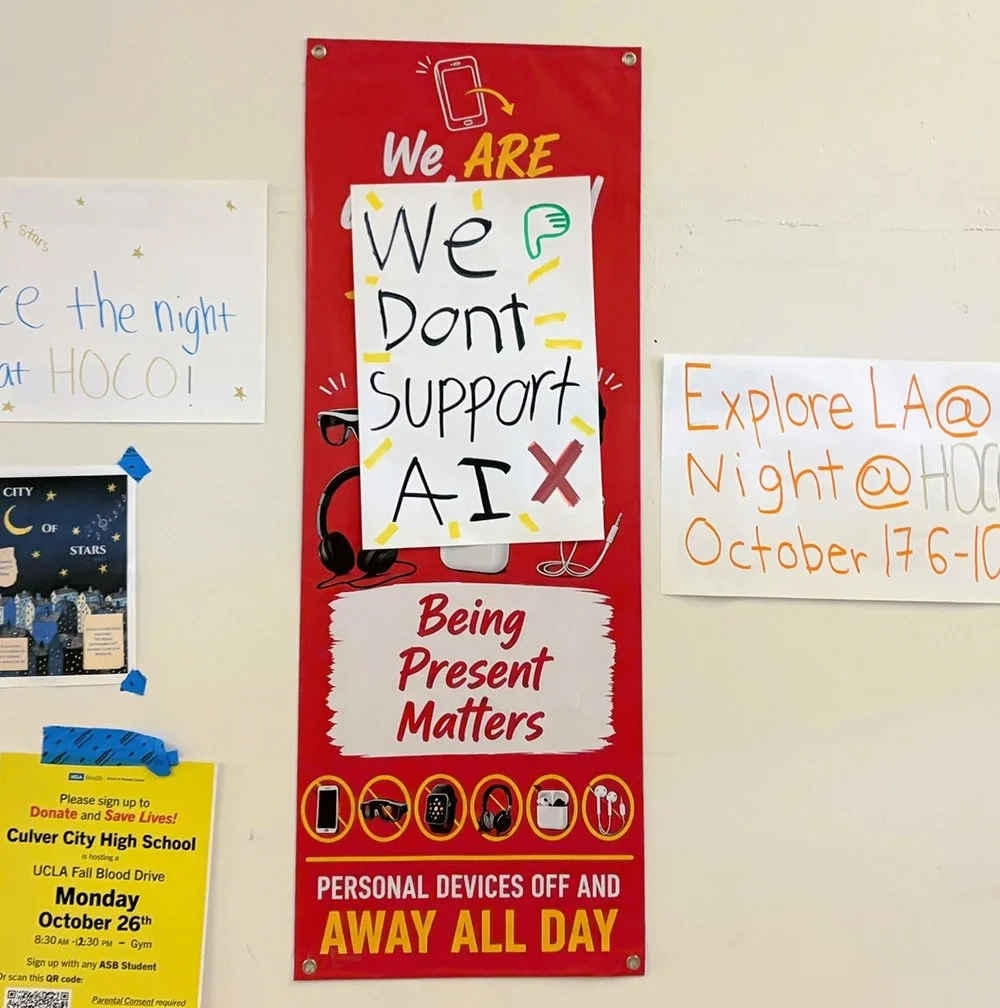
In first hall, a handmade poster protested the AI-generated one behind it.
The complaint I’ve heard most about the new phone policy has nothing to do with phones. CCHS students have been especially critical of the AI-generated graphics used to promote the new rules. These AI posters are hung in every classroom, and long banners decorate the hallways. Not only is it hypocritical—admin and teachers have been vocal about the fact that students should not use AI to generate work—it can feel disrespectful to CCHS students.
“You can tell that it was made by a machine. You can tell that no care went into it,” said Serena Fisch, a senior and co-President of AVPA Visual Art.
At an assembly on the third day of school, Dr. Thomas, our principal, acknowledged the backlash against the AI-generated posters. She explained that the admin didn’t have time to hire a graphic designer to publicize the new phone policy or to design graphics themselves. Then, she told any student graphic designers that she’d love it if they would create better posters. And yet, administrators have yet to reach out to any student artists.
For instance, the brand new CTE Graphic Design class. “That’s specifically what they requested when we made it—that’s how the class operates,” said Kian Darien who teaches the class and wrote the curriculum. As a Career Technical Education pathway, the course allows students to experience graphic design as a profession, requiring them to complete real design projects for organizations at CCHS. Anyone can order graphics for free on their website. Darien noted that the administration has not requested any design help yet.
The AVPA School of Visual Art similarly has yet to received any invitations to design posters for admin, even though in the past they’ve regularly made posters to advertise school musicals and plays, dance concerts, and their own art shows.
“Its kind of insulting,” said Keira Tsai, a senior and the other co-President of AVPA Visual Art. “We’re right there.”
It is understandable that our overworked administrators initially made posters using AI, but by keeping the AI posters up, they’re not giving student artists a chance to help them with marketing. And, they’re also isolating themselves from students.
“There’s a lot of general disrespect towards authority at this school, and I think the best way for [admin] to combat that would be to make a more personal connection with the student body. But I feel like when they’re not even putting the time or effort into making posters that are going to be displayed around the school, why should I put in any effort?” said Fisch. “I’m going to listen to a human. I’m not going to listen to an amalgamation of slop.”
It’s clear that the school administration underestimated both how quickly students would recognize that the posters were AI-generated and the extent of their distaste for it. While Gen Z is the generation that uses AI the most, we’re also the generation most sure about its negative impacts on our futures, perhaps because we’re so often exposed to it. Debates over whether or not AI has any place at all in art and graphic design can be contentious. But hastily generated AI images undeniably lack the clarity that any art, even a school rules poster, needs in order to be impactful.
The bottom line is: it’s time for these posters to come down and be replaced with art made by actual humans. Ideally, the student artists who are willing to collaborate with their school administration whenever they’re ready. And in the future, these students should be involved from the start.