New District-Wide Phone Policy Gives Centaurs a Reset
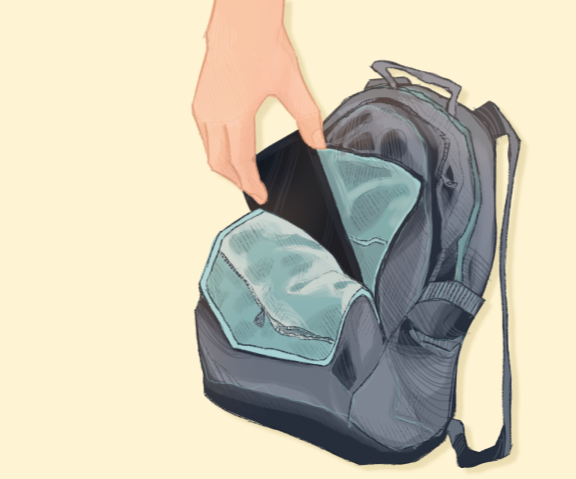
Art by Una Finn
Over summer vacation, in accordance with state-wide legislation aimed at improving student engagement and mental health, the Culver City School Board approved a brand new district-wide phone policy: “off and away all day.” Cue dramatic sting.
All elementary, middle, and high school students (with some medical exceptions), must now keep any personal devices in their backpacks between the opening and closing bells of each school day. At CCHS, teachers are responsible for enforcement of these rules—prompting students to put phones away, and, if necessary, confiscating them—during classes, and administrators shoulder the burden for lunch and passing periods. This is a step up from the previous policy, which only restricted phone use in the classroom.
Unsurprisingly, many students took issue with the change. Senior Jacob Zeitlin, the school board’s Student Board Member at Large, surveyed over 200 high school students on the issue. Almost every one said they’d like to see some modification to the policy, and 85% said they believed phone use shouldn’t be policed during lunch periods. In a presentation at a board meeting, Zeitlin also noted that many students said they needed their phones to coordinate transportation home from school, to manage their extracurriculars, or even just to unwind during stressful school days.
Some CCHS teachers agree with students. “Give us the instructional time, but then you should also have your time and should be able to listen to music,” said Jenny Reyes, a 9th and 10th grade English teacher.
But despite all the objections, the new policy and its stricter guidelines seem to be working. Ms. Reyes has already noticed less students sneaking peeks at their phones in class and less cheating during tests compared to last year. Dr. Carlos Valverde, an English teacher and the student council advisor, said he has observed, “more laughter, chatter, and socialization among students” in his classes.
Either way, dissent against the phone policy has the potential to draw high school students into the wider workings of the school board. CCHS Administration recognizes that a blanket policy for elementary, middle, and high schools doesn’t account for the differences in maturity between these age groups. High school students are responsible for more aspects of their lives that require personal devices for communication—they manage their own schedules, lead clubs and sports teams, and some have jobs. High schoolers are also, on the whole, better able to regulate their own phone usage.
The new phone policy was drafted by a committee of parents, teachers, administrators, and a very small number of students—none of whom attend CCHS. Centaur voices weren’t included in the decision-making process at the district level, but they can be now if students speak at School Board Meetings.
“You guys are loud and make noises about everything else,” one high school administrator said, “so now just make that noise about the things you guys are passionate about.”